COMING May 6, 2026
READ CHAPTER ONE FIRST IF YOU HAVEN’T…

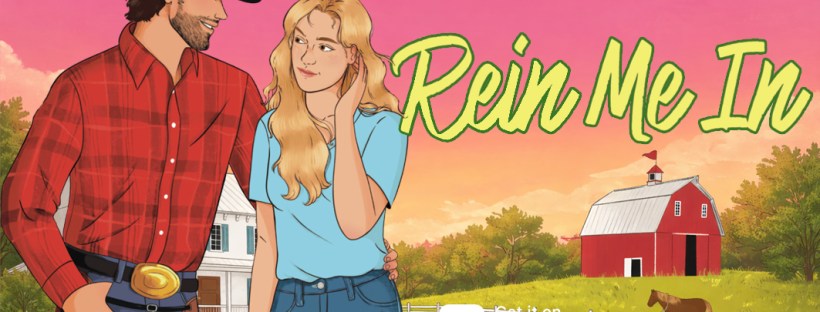
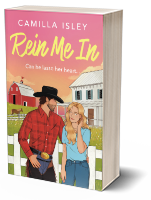
Can he lasso her heart?
Faye came to Blue Crescent Harbor for a fresh start. A place to disappear, teach first grade, and keep her secrets buried. She didn’t expect the hottest single dad in school and small-town royalty to march into her classroom to share his stubborn opinions. Tall, rugged, and fiercely devoted to his son, he’s a walking complication in flannel and cowboy boots.
Ryder has no patience for anyone telling him how to raise his kid. Especially not a sharp-tongued teacher with city polish and eyes promising trouble. Their mutual dislike is second only to their explosive chemistry!
Too bad she can’t avoid him. At parent meetings. On the dancefloor at the local dive bar. In her dreams, wearing that backward baseball cap and a grin that makes her forget she’s sworn off men. But he’s off-limits. She’s his son’s teacher, and this town loves to gossip. Yet Ryder’s flirty banter, his son’s adoration, and his dedication to his family’s ranch make sticking to the rules difficult. Staying invisible was the plan, but he makes her want to be seen. What if the real risk is not running, but wanting to stay?
PRE-ORDER Now:






Chapter TWO
RYDER
Miss Oh-So-Prim whips the question at me all silky steel and flawless composure. She’s sitting with her spine stiff, looking down on me with eyes—a shade between honey and whiskey that the afternoon light turns to amber—that size me up as if she’s already marked me a few acres short of respectable. A person’s worth, in her world, probably comes down to polish and price tags.
Everything about her screams expensive. Her clothes, jewelry, even the way she’s got her dark blonde hair twisted into some complicated low knot that makes her neck look elegant and long. Not a strand out of place.
How can Rhys stay in a room with her for seven hours a day without getting frostbite?
And how the hell is this the same teacher my son hasn’t shut up about since August? Miss Rose said this, Miss Rose did that, Miss Rose is the best teacher in the entire world, Dad. He talks about her like she hung the moon, but the woman in front of me looks like a stuck-up high society doll who’d faint if she got dirt under her manicured nails.
Sweet mercy, is my seven-year-old crushing on his teacher? Maybe my son inherited my terrible taste in women. At least he has the excuse of being young. What’s mine? Because yeah, I’m not blind to the fact that underneath the city-princess polish, Faye Rose is a knockout. The kind of beautiful that makes men—apparently of all ages—do stupid things.
What a waste to wrap such a pretty package in judgmental silences and a highbrow attitude. She’s one of those people who show up in Blue Crescent Harbor thinking they’re doing us a favor, bringing culture to the unwashed masses or whatever.
“Please.” I cross my arms, mirroring her hostile pose while keeping my cap out to the side, not to squash it. “Go ahead.”
Irritation colors my words, but what did she expect? She called this meeting, pulled me away from monitoring the fields for soil moisture—I still need a clear read to see which fields are ready for seeding—and now she’s wrinkling her nose down at me like I tracked mud through her pristine little kingdom. Which, okay, maybe I did. But it’s a rural community; if she wants to stick around, she’d better get used to a little dust. I cross an ankle over one knee to make it clear I’m not ashamed of what I do for a living and wear the dirt that comes with working the land with pride.
Her gaze flicks to my boot before returning to my face. The corners of her mouth tighten as if she’s cataloging every single thing wrong with me. The simple clothes. Messy hair. The three-day stubble, because who has time to shave while running a farm and raising a seven-year-old?
“Mr. Evans,” she begins, her voice like broken glass floating in syrup—sweet on the surface but with hidden edges that slice. “Thank you for coming. I know how busy you must be this time of year.”
Yeah, lady, I don’t think you get how swamped I am.
What would someone like her know about harvest schedules and weather windows?
“The reason I asked you to come today has nothing to do with questioning your family structure or your parenting.”
Another standard introduction to some backhanded criticism.
“I wanted to discuss the Mother’s Day event because the way schools frame these occasions needs to change.” She leans forward, and I catch a hint of perfume, an upscale spicy fragrance like the rest of her. “Not just for Rhys, but for all students who might feel excluded or spotlighted by events that assume a specific family dynamic.”
The tension coiled behind my sternum since she mentioned Rhys’s mother loosens, but confusion takes its place. This isn’t going where I thought it would. Whenever a teacher calls me in about Abigail’s absence, it’s always the same thing: checking that poor little Rhys isn’t left out because his mom decided parenting was too much trouble. Every damn school event, every family photo day, every time some well-meaning teacher wants the kids to make crafts for Mommy.
“What I’m proposing,” she continues, regarding me not with anger, but… disappointment? As if I were a student who gave the wrong answer to a simple question. “… is that we reframe these gatherings. Not as Mother’s Day or Father’s Day, but as inclusive events that recognize families come in different forms.”
Each word lands like a slap on the Evans pride that I threw in her face. I have a chip on my shoulder the size of Missouri, and she’s talking about… inclusion?
“We have students in foster care.” Emotion bends the steel in her composure. “Kids being raised by grandparents, aunts, or older siblings. Kids with two moms or two dads. Or like Rhys, who have one parent doing the work of two.” Compassion flickers across her face—not pity, like I’d assumed before. “The last thing any educator should do is single out a child because their household doesn’t fit a narrow definition.”
I sink back in the chair, feeling about two inches tall. The defensive anger I’ve worn as armor for the past fifteen minutes dissolves, leaving me feeling exposed and foolish. She’s not judging Rhys or me or our family. She’s protecting him and other kids in similar situations.
“The traditional approach, while well-intentioned, can inadvertently hurt the children we’re celebrating.” Her hands move as she speaks, graceful gestures that emphasize her points. I try not to stare at her dainty fingers or think about how soft they felt when we shook hands. “Imagine being six or seven, watching your classmates make Mother’s Day cards while you sit there wondering if you should make one for your foster mom who you’ve known for three months, or for the birth mother you can’t remember.”
A wisp of hair escapes her perfect bun, falling against her cheek, but she doesn’t fix it. “We should celebrate the people who love and support our students, regardless of titles or blood relations. The grandmother who does morning drop-off. The foster dad learning how to braid hair from YouTube videos. Or the big brother who comes to parent–teacher conferences—whoever represents family to them.”
Shit.
Shit, shit, shit.
The more she talks, the smaller I feel. I came in guns blazing, accused her of not understanding families like ours, of pushing her city ideas on our town. But she gets it; I’m the one who got everything wrong.
“Before bringing this topic to the attention of the school board,” Miss Rose concludes, “I thought it best to consult with the parents of children affected by the current structure. To see if they would back the proposition and to gather signatures for a petition that would give the proposal more weight with the board. Something concrete to show this isn’t only the opinion of an outsider.”
The emphasis she puts on “outsider” has enough bite to let me know she caught my earlier comment. Has she been shut out more than once for being from out of town? I want to kick the assholes who did that where it hurts, starting with myself.
She smiles then, sweet as honey, sharp as a knife. “I’m sure the signature of an Evans would carry considerable weight.”
Oh, she’s fucking with me now, and with such grace. Throwing my words back at me. Every pretentious, self-important declaration I made, she’s serving right back with interest. The woman’s got more spine than I gave her credit for, and damn if that doesn’t make her harder to look away from.
“Your son”—her edges soften when she mentions Rhys—“is a remarkable boy. Bright, funny, and kind to his classmates. You’ve done an excellent job raising him.” She meets my eyes. “Which is why I presumed you’d understand the importance of assuring every child is comfortable, regardless of their circumstances. But perhaps I misjudged.”
All my self-righteous indignation cools into shame. Because she’s right, isn’t she? I was ready to fight her about Rhys, ready to defend my boy against some perceived slight, while she was looking out for every kid who gets that punch to the gut when everyone else is making cards for someone who left.
The silence that follows is oppressive as a sky pressed low with heavy clouds that refuse to break. She’s called me out without raising her voice once or losing her temper. But she methodically dismantled my entire tantrum and made me look like the ass I am.
I clear my throat, but words don’t come. What can I say? Sorry I assumed you were a judgmental city princess about to rub my failures in my face? Sorry I didn’t let you talk for five minutes because any mention of Abigail makes me see red? My apologies for acting like having the Evans name meant I could treat you like you were beneath me, or like you didn’t belong in Blue Crescent Harbor?
“Mr. Evans,” she says after the silence stretches too long, that sweet-sharp smile still in place, “this is your cue to share more of your opinions. Unless you’ve run out?”
Fuuudge, she’s roasting me. Politely, professionally, but thoroughly roasting me. And I deserve every singe.
“Err…” I cough. “Where do I sign?”
Her eyebrows lift as if she expected more of a fight. But she reaches for a clipboard on her desk, calm as ever, and slides it across to me. Our fingers don’t touch—she’s careful about that. Ten minutes ago, I would’ve blamed the gesture on snobbery about my appearance; now I’m pretty sure it’s contempt for my attitude. And she’s got every right.
I scrawl my name on the petition, noting that mine is the third signature after Rita Holbrook and Jennifer Martinez. Both single moms.
I return the clipboard and stand to my feet. She rises too, her eyes burning ambers that shine with disdain. I must’ve confirmed every ugly assumption she might’ve had about narrow-minded, small-town men.
“Miss Rose, I—” The words tangle in my throat. I want to explain about Abigail, about how she left when Rhys was barely walking, about how every mention of mothers scrambles my good sense. About how I’ve spent six years making sure my son never feels less than, only to have someone suggest I wasn’t doing enough. “I mean, it’s been a—”
“The pleasure has been all mine, Mr. Evans.” Her smile is still polite, but a wall has sprung up behind it, solid as the limestone bluffs along the lake. She’s done with me, and I can’t blame her.
It’s been a pleasure to meet you is not what I wanted to say. Not even close. More like, It’s been a few hard years. But as she graciously glares at me with those incandescent eyes, I realize I’ve burned through whatever patience she had for me. Anything I say now will make it worse. I’ve already shown her my worst side—hotheaded, defensive, quick to judge. A man who storms into a classroom ready for war without bothering to check if there’s even a fight.
“Right.” I reach for my Bobcats cap, pulling it on backward. It’s a retreat, and we both know it. “Thanks for… for thinking of Rhys.”
“I think of all my students, Mr. Evans.” The dismissal in her tone is clear as lake water. “It’s my job.”
I nod, because what else can I do? I’ve torched this bridge before I even knew if I wanted to cross it. Not that I want to. Or that I could, since she’s Rhys’s teacher. Even if first grade is almost over and soon, she won’t be his teacher anymore. No. Nope. Not going there.
I turn and head for the door, glancing back when I get to the threshold. She’s pushing papers into a leather messenger bag like not only have I been dismissed, but also already forgotten. Her profile is sharp and lovely in the golden light, and I understand why Rhys raves about her nonstop. She makes you want to be better just by existing in the same space.
Too bad I’ve introduced her to all my worst flaws instead.
I step out, my boots heavy—and not for the mud caked to the soles.
PRE-ORDER in eBook:

PRE-ORDER in AudioBook:





 Camilla Isley